

Leadership & Administration

E-books are now distributed via VitalSource
VitalSource offer a more seamless way to access the ebook, and add some great new features including text-to-voice. You own your ebook for life, it is simply hosted on the vendor website, working much like Kindle and Nook. Click here to see more detailed information on this process.
To guide the work of academic administrators and ensure consistency with accepted norms and practices in higher education, institutions devote a great deal of attention to developing and implementing policies and guidelines. Policies and procedures are needed to set expected behaviors, clarify goals and objectives, ensure compliance with laws and regulations, and express institutional values and visions. Admittedly, policies and procedures are not always adequate to address unanticipated challenges. More than usual, academic administrators must swiftly make decisions and address the concerns of stakeholders in situations where traditional policies or guidelines are outdated or impractical. Navigating Gray Zone Challenges in Academia: 40 Real-Life Leadership Lessons contains a collection of broad-range real-life situations faced by academic leaders. Cases were selected to illustrate how individuals and institutions deal with situations where established policies and procedures may have been inadequate. Names and some details have been altered to preserve the anonymity of the individuals and institutions involved. Each case includes perspectives and commentaries shared by seasoned leaders who have had illustrious careers in higher academic administration. This book is designed for university administrators to use in facilitating workshops, seminars, and roundtable discussions that address difficult and complex situations. The book also offers valuable guidelines for how to address those situations. Of course, the book does not address every problem or challenge that administrators may encounter. However, it should be helpful to current and aspiring administrators as well as to graduate students in higher education administration programs. The book will enable readers to understand and appreciate the complexities of university administration, the challenging situations faced by administrators, the inherent limitations of policies and procedures, and the importance of updating of policies and procedures on a regular basis.Perfect for courses such as: Foundation of Educational Leadership; Organizational Theory and Behavior; Leadership and Management Practice in Education; Higher Education Administration; Foundations of Academic Leadership
More
E-books are now distributed via VitalSource
VitalSource offer a more seamless way to access the ebook, and add some great new features including text-to-voice. You own your ebook for life, it is simply hosted on the vendor website, working much like Kindle and Nook. Click here to see more detailed information on this process.
Stop checking boxes. Start leading a quality transformation. If you are an institutional leader, academic dean or program leader facing an upcoming accreditation deadline, you know the feeling: a mix of anxiety, overwhelm, and the sinking suspicion that you are about to drown your faculty in hours of meaningless "box-checking." Across higher education, accreditation has devolved into a voluminous, exhausting documentation exercise that drains institutional resources without driving genuine quality improvement. It doesn’t have to be this way. In Accreditation Simplified: A Practical Guide for Educators, Dr. Amy M. Dykens leverages her extensive campus experience as a former faculty member, program leader, academic dean, and director of institutional research to dismantle the compliance trap. Having held nearly every role that touches the campus review cycle, Dr. Dykens delivers a refreshing, actionable roadmap to transform a high-stakes burden into a powerful catalyst for institutional excellence. This book skips dense, abstract theories of evaluation studies and gives you the exact tools, terminology, and strategies needed to lead accreditation confidently from day one. Built around the proprietary Accreditation, Simplified Framework™, you will master a streamlined, 6-step path to submission readiness. Why this book will change your accreditation leadership style: learn how to move the accreditation lead role from a high-pressure, isolating burden that feels like a life sentence into a manageable, sustainable part of regular work and planning that naturally develops your successors. Accreditation Simplified is not a passive compliance checklist—it is a practical field guide for educators. Purposefully designed to be read cover-to-cover or used as a spot reference guide, it arms you with the systematic organizational memory required to lead your next site visit with complete confidence.
More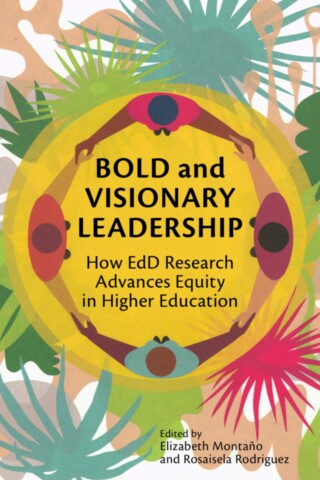
E-books are now distributed via VitalSource
VitalSource offer a more seamless way to access the ebook, and add some great new features including text-to-voice. You own your ebook for life, it is simply hosted on the vendor website, working much like Kindle and Nook. Click here to see more detailed information on this process.
Bold and Visionary Leadership: How EdD Research Advances Equity in Higher Education includes contributions of scholarship and scholarly reflections on the experiences of visionary higher education faculty and leaders who center equity to transform their institutions. The chapters explore the role of the scholar-practitioner in enacting bold policies and practices and elevating their voices in settings where their voice as practitioners are often secondary to the presumed expertise of the academic leadership. Specifically, this book shares experiences and scholarship that emerged from their time in EdD programs and speaks to how their leadership and scholarship helped expand and redefine equitable practices and equity-centered research in their institutions. This book centers the voices of faculty and alumni of EdD programs, who share the impact of their programs and research while continuing to reflect on the current challenges they are facing as leaders in higher education. The purpose of this book is for scholar-practitioners to bridge research and practice while centering equity and leadership frameworks within higher education.Perfect for courses such as: Educational Leadership; Introduction to Doctoral Research; Higher Education Leadership; Access and Equity in Education; Leadership Issues in Education; Introduction to Research Design
More
E-books are now distributed via VitalSource
VitalSource offer a more seamless way to access the ebook, and add some great new features including text-to-voice. You own your ebook for life, it is simply hosted on the vendor website, working much like Kindle and Nook. Click here to see more detailed information on this process.
Since its formation in 2016, Education Deans for Justice and Education (EDJE), a group of more than 400 education deans and leaders from large and small institutions, has been grappling with what it means to advance — as well as to trouble — justice and equity in and through our schools of education and education systems more broadly. Leading on the EDGE brings together ten chapters, along with an introduction and conclusion, written by deans and leaders from a diverse set of institutions across the United States. These leaders have implemented ideas that support an equity stance in their institutions using the EDJE Framework for Assessment and Transformation, an instrument designed for this purpose. We are living and working in precarious times with justice-oriented work at universities threatened at the federal level with possible serious ramifications at both public and private universities. With diversity, equity, and inclusion (DEI) programs, affirmative action measures, and equal opportunity policies under attack, university leaders committed to actions that support equity and access in their institutions require resources to support their work. Many initiatives that claim to address issues of justice and equity focus solely on curriculum and pedagogy. This Framework addresses all of the major areas in a school including admissions, hiring, development, budget priorities, community engagement, the support of faculty, staff, and students of color, as well as curriculum and pedagogical practices. The Framework was written by a large and varied group of people with great expertise and experience, who came together several times to pool their knowledge and resources. Through Leading on the EDGE, the authors tell complex and varied stories. While in some institutions, faculty quickly embraced ideas for focusing on justice and equity, other faculties were more reluctant. The stories in this volume reflect moments of vulnerability as well as strength. Authors reflect on the issues and challenges that arose from this work, how they adapted the Framework for their unique contexts and goals, how they got started, challenges they encountered, initial outcomes, how the work can be translated to other settings within the university and in other educational settings, and provide concrete strategies for their colleagues. At a time when education leaders are under attack, Leading on the EDGE provides concrete ideas and strategies for taking a stand and proclaiming a commitment to the transformative work of justice and equity in higher education. Chapters of Leading on the EDGE are conveyed in a variety of genres and styles: some are organized as case studies, others are more similar to reflective essays; some focus on assessment of the institution or school’s focus on equity and justice, while others turn their attention to how programs were implemented, including those results; some are written in a more traditional academic style while others more autobiographical, dialogical, or even artful. Perfect for courses such as: Higher Education Administration, Educational Leadership, Multicultural Education, Foundation of Education, Educational Policy, Race and Education, Research Methods, Social Justice Education, Organizational Management (in Education)
More
E-books are now distributed via VitalSource
VitalSource offer a more seamless way to access the ebook, and add some great new features including text-to-voice. You own your ebook for life, it is simply hosted on the vendor website, working much like Kindle and Nook. Click here to see more detailed information on this process.
Higher education in the United States appears to be in trouble. Much of the American public sees colleges and universities as disengaged, elitist, not open to new or alternative ideas, something to be escaped—not to mention expensive, unproductive, out of touch, unaccountable, oblivious to their own failings, and increasingly irrelevant. There are many in our society who are promoting a vision of higher education that uses these perceptions to call into question the role of colleges and universities in our democracy. But on the author’s campus of Augsburg University and on campuses across the country, in our neighborhoods, and wherever our alumni live and work, the author sees just the opposite. He sees students who view education as a gift that carries with it a responsibility to give back. He sees faculty and staff committed to the vision that students receive a three-dimensional education—an education that equips them to make a living, make a life, and build community. He sees alumni and neighbors who care about each other and the world, and who are working each and every day to support a just and inclusive democracy. For those of us who believe in the public purposes of higher education, we live in the tension between negative perceptions of our worth and the reality of what we do everyday on the ground to support social mobility, economic well-being, and a robust common life. In the context of that tension, Paul Pribbenow believes that there is a moral claim on those of us who lead colleges and universities to step forward with an alternative story. At a time when higher education is often characterized as a private, transactional good, we are called to articulate a vision that challenges the prevailing narrative and makes a moral case for higher education as an engine for a robust, pluralistic democracy. In more than two decades as a university president, he has sought to advance that case. To illustrate how, he will use the story of Jacob wrestling with the angel as depicted in the book of Genesis. Pribbenow’s argument, and sincere belief, is that higher education is about learning to wrestle with ideas, values, and relationships that demand our attention. He believes that students must learn to see the topics they wrestle with not as obstacles to overcome or defeat, but as “angels” that demand respect and thoughtful attention. The purpose of this vision of education is like it was for Jacob: to be named and claimed as those called to meaning and purpose in the world. And like Jacob who became Israel, wrestling with angels leaves students wounded, vulnerable, humbled—and also equipped for the work they are called to do - to thrive as neighbors, professionals, and citizens.Perfect for courses such as: Ethics and Higher Education; Higher Education Leadership; Education and Democracy; Leading Faith-Based Colleges and Universities; The State of Higher Education in America; Student Success and Academic Belonging
More
E-books are now distributed via VitalSource
VitalSource offer a more seamless way to access the ebook, and add some great new features including text-to-voice. You own your ebook for life, it is simply hosted on the vendor website, working much like Kindle and Nook. Click here to see more detailed information on this process.
Hidden in Plain Sight: Women in Educational Leadership is an essential resource that examines the experiences, challenges, and achievements of women leading in higher education. Written for current and aspiring women academic leaders, it provides the tools, insights, and support needed to navigate this complex terrain successfully. Hidden in Plain Sight addresses a striking paradox: while many accomplished women hold academic leadership positions, they often remain invisible within their own institutions. Despite occupying roles of authority, women leaders frequently find themselves overlooked, unrecognized, and unheard. This contradiction exposes the gap between institutional claims that leadership is gender-neutral and the reality women face daily in academic settings. Drawing on demographic data, statistical trends, and evidence-based practices, this textbook offers practical guidance grounded in real experience. Readers will find case studies, personal anecdotes, and actionable strategies for advancing in academic leadership while maintaining personal integrity and well-being. The book explores various leadership approaches and identifies common pitfalls, equipping readers with knowledge to navigate challenges effectively. Hidden in Plain Sight serves as both mirror and map—reflecting the realities women leaders experience while charting pathways forward. It empowers current leaders to advocate for themselves and their institutions while inspiring the next generation to pursue academic leadership with eyes wide open and strategies firmly in hand. This is the guidebook for women determined to lead authentically, effectively, and sustainably in higher education. The book is written about and for women in leadership positions, and for women interested in educational leadership within the academy. It will also be of interest to college, university and public libraries; individuals including scholars in the discipline; and it can serve as a critical textbook in a variety of Leadership classes in undergraduate and graduate programs.Perfect for courses such as: Women and Leadership; Higher Education Administration; Gender Studies in Education; Educational Leadership and Policy; Sociology of Higher Education; Feminist Theory and Practice; Women's Studies Capstone Seminar; Organizational Behavior in Education; Diversity and Inclusion in Higher Education; Professional Development for Graduate Students
More
E-books are now distributed via VitalSource
VitalSource offer a more seamless way to access the ebook, and add some great new features including text-to-voice. You own your ebook for life, it is simply hosted on the vendor website, working much like Kindle and Nook. Click here to see more detailed information on this process.
Learning to See the University: Power, Practice, and Improvement in Academic Systems is a sharp and reflective exploration of power, policy, and survival in modern higher education. Written in the spirit of Niccolò Machiavelli’s The Prince, the book translates political realism into the everyday governance of universities, where authority operates through committees, budgets, rankings, accreditation, and carefully managed narratives rather than formal command. Neither parody nor exposé, Learning to See the University offers a clear-eyed account of how universities function beneath the language of shared governance and collegiality. Drawing on systems thinking and Improvement Science, it explains why reforms stall, why innovation must often appear as continuity, and why leadership in higher education is shaped more by timing, incentives, and legitimacy than by vision alone. Structured as a modern adaptation of Machiavelli, each chapter reimagines concepts such as virtù, fortuna, fear, reputation, and loyalty within the academic ecosystem. Departments emerge as semi-sovereign fiefdoms, committees as instruments of stability, rankings as tools of perception, and crises as catalysts for change. The tone is accessible, wry, and reflective. Humor provides distance without cynicism, allowing readers to recognize familiar institutional patterns while gaining clarity rather than frustration. New administrators will find a survival guide; experienced leaders will recognize a mirror. Intended for provosts, deans, department chairs, and graduate students in higher education leadership, Learning to See the University is suited for doctoral programs, leadership seminars, and administrative retreats. Ultimately, it is not a guide to manipulation, but an argument for realism with conscience—and for leading universities with wisdom, restraint, and integrity.Perfect for courses such as: Higher Education Leadership; College and University Administration; Higher Education Policy and Politics; Institutional Research and Effectiveness; Strategic Planning in Higher Education; Change and Innovation in Higher Education; Finance and Budgeting in Higher Education; Higher Education Law and Ethics; Leadership Theory in Education; Organizational Theory in Education; Systems Thinking and Improvement in Higher Education
More
E-books are now distributed via VitalSource
VitalSource offer a more seamless way to access the ebook, and add some great new features including text-to-voice. You own your ebook for life, it is simply hosted on the vendor website, working much like Kindle and Nook. Click here to see more detailed information on this process.
The Critical Role of Ethnic Studies in Educational Leadership addresses the urgency of having equity-minded and globally-oriented transformative leaders who seek to empower students and teachers alike through their commitment to integrate ethnically and culturally rich curriculum and instruction in today’s schools. The ethnic studies revival movement has emerged to combat the cycles of ignorance affecting society in negative ways. Unless educational leaders possess relevant cultural and ethnic proficiency, have global perspectives, and are eager to lead by example, educators will continue to flounder about the best ways to cultivate pluralism in American schools. Moreover, shifts in mindsets toward ethnically and culturally relevant school learning and teaching culture are needed for leaders to ensure that they not only have the knowledge and skill, but also the courage and will to reform schools through an inclusive and comprehensive approach based on the axioms of ethnic studies education in the K-20 settings. To amplify the importance and interconnected pathway that exists across these policies that bridge high schools, community colleges, and state universities, this volume details how educational leaders in California are continuing to advance social justice through the implementation of Ethnic Studies and the role that educational leadership—including credential, masters, and doctoral programs—can play in the full attainment of the goals for ethnic studies implementation. The lessons learned in California are relevant across the nation and around the world. As Ethnic Studies has expanded across PK-12 and higher education contexts, extant studies have both quantitatively and qualitatively detailed how participation in quality Ethnic Studies courses and programs in and out of schools can improve many student outcomes such as engagement, critical thinking, and achievement, as well as attendance, increased GPAs, and graduation rates. The work to effectively implement Ethnic Studies requires strong leadership, including students, teachers, community leaders, and site and district level administrators. The Critical Role of Ethnic Studies in Educational Leadership is an important book that appeals to a variety of readers. Those interested in a deeper understanding of Ethnic Studies will find the book will better inform them. Educational leaders are provided with both the rational and the methodologies for implementing this important concept in curriculum. It is also a valuable teaching resource for a variety of classroom settings.Perfect for courses such as: Intro to Ethnic Studies; Intro to Chicano Studies; Climate & Environmental Justice; Educational Reform; Educational Policy Environments; Theories of Cross-Cultural Education
More
E-books are now distributed via VitalSource
VitalSource offer a more seamless way to access the ebook, and add some great new features including text-to-voice. You own your ebook for life, it is simply hosted on the vendor website, working much like Kindle and Nook. Click here to see more detailed information on this process.
More than a century after William James published his provocative critique The PhD Octopus in 1903, his warnings about the corrupting entanglements between institutions and graduate students remain strikingly relevant. Doctoral Studies as Educational Industrial Complex revisits James’ concerns through a contemporary lens, offering a critical examination of doctoral education in the field of education in what feels like perennial crisis. Throughout the volume, contributors grapple with the tensions James identified: the obsession with credentials over genuine intellectual work, the “tyrannical machine” of institutional demands, and the misalignment between doctoral preparation and actual career paths. These tensions are particularly acute in practitioner-oriented EdD programs designed to produce scholar-practitioners who often remain in their local communities rather than entering the academy. Yet research-oriented PhD programs face their own crisis, as they continue to prepare scholars for a tenure-track job market that has dramatically contracted. With only 32% of faculty holding tenured or tenure-track positions in 2023—down from 53% in 1987—the traditional pathway to academic careers has fundamentally eroded. The book speaks to multiple audiences: faculty who supervise doctoral students and seek to understand the challenges they face; doctoral students navigating alternative program formats and uncertain career prospects; administrators responsible for program design and accreditation; and scholars interested in the future of higher education and professional preparation. By centering faculty expertise and critical analysis rather than external market demands, this volume offers a necessary counter-narrative to prevailing trends in doctoral education reform. Ultimately, this book argues for a reconsideration of what doctoral education should accomplish and for whom, grounding these questions in both historical perspective and contemporary realities.
More
E-books are now distributed via VitalSource
VitalSource offer a more seamless way to access the ebook, and add some great new features including text-to-voice. You own your ebook for life, it is simply hosted on the vendor website, working much like Kindle and Nook. Click here to see more detailed information on this process.
In a higher education landscape that seems to be increasingly focused on accreditation and accountability, administrators, faculty, and staff in higher education institutions expend considerable resources engaging in assessment activities in response to the demands of compliance-oriented external forces. Beyond Accreditation: Designing and Implementing Meaningful Quality Assurance and Continuous Improvement Systems presents an alternative paradigm for consideration: the primary purpose of assessment systems should be to provide program improvement, with the resulting data serving as supporting evidence for compliance-oriented requests. The book is intended to provide a foundation of background knowledge to empower programs, regardless of size or disciplinary context, to engage in the processes associated with assessment in pursuit of continuous improvement. It supplies data and other information in three distinct ways throughout the book. In some chapters, candid dialogues between the authors are presented in a conversational tone. In others, a more philosophical and sometimes historical perspective provides background knowledge informing why certain things are done and the purposes those activities serve. The remaining chapters present a practical approach to engaging in assessment, from identifying signature assessments to analyzing and reporting on data, all within the overarching context of designing an assessment system that serves continuous improvement efforts. The accountability mindset that has taken hold in education, and in higher education in particular, has fostered a view of assessment as a complicated, challenging, and burdensome enterprise that is done to us in pursuit of compliance. Throughout the book, assessment is presented as something to be done in pursuit of continuous improvement. The authors hope that its contents prove useful to anyone in search of assistance in these efforts. Perfect for courses such as: Educational Program Evaluation; Teacher Education; Education Policy; Teacher Education Policy; and Human Resources in Education.
More