
International & Comparative Education

E-books are now distributed via VitalSource
VitalSource offer a more seamless way to access the ebook, and add some great new features including text-to-voice. You own your ebook for life, it is simply hosted on the vendor website, working much like Kindle and Nook. Click here to see more detailed information on this process.
Teaching in PreK-12 classrooms requires not only pedagogical knowledge and field-related skill, but also creativity, flexibility, and responsiveness. Teachers, as lifelong learners and as leaders in education, must make sense of curricula, policies, research, and evidence in order to guide and shape their practices in unique and diverse contexts. How teachers make use of these “best practice” guides varies — there is no one-size-fits-all program or method that can be picked up and applied without classroom teachers’ localized and reflective contextualization. Designed for use by preservice teachers, experienced educators, mentors and coaches, school leaders, and teacher preparation faculty, Recognizing “Best Practices” as Locally Situated calls teachers into their power to disrupt, transform, and lead towards change in PreK-12 schools. This volume makes visible the critical work teachers engage in daily as they evaluate, interpret, implement, and assess the impact of particular strategies, resources, and approaches in their classrooms. Teachers must iterate on their teaching practice in cycles of continuous learning and reflection toward educational equity and social justice. Recognizing “Best Practices” as Locally Situated celebrates the voices, power, and pedagogical practices of teachers across a variety of content areas and settings, ranging from early childhood to adolescence and from transnational contexts, including multilingual classrooms in the U.S., Lebanon, and Ukraine, along with teacher preparation programs in the U.S. and Europe. Through vignettes, analysis, reflective prompts, lesson plans, resources, and activities, the authors make clear that teachers are agentic, innovative, and adaptive practitioners who translate evidence-based “best practices” into context-specific, responsive, and learner-centered pedagogical moves that build upon the assets of their students to support learning. They invite readers into their (trans)local worlds as readers’ shape and reconfigure their own (trans)local classrooms, schools, and educational ecosystems. Recognizing “Best Practices” as Locally Situated aims to bring together the voices of practitioners across K-12 education to examine their situated and expert testing, adaptation, and refusal of “best practices” within their classrooms and communities. The authors explore a best practice, as housed in this partially archived version of the U.S. Department of Education's Best Practices Clearinghouse or as explicitly named in research or practitioner literature. They explain the ways they have tested, accepted, rejected, modified, or otherwise adapted and contextualized that “best practice” within their own teaching context and with equity, inclusion, diversity, belonging, and social justice in mind. Recognizing “Best Practices” as Locally Situated provides an important overview and critique of currently circulating “best practices” for both novice and experienced educators. It provides classroom-tested pedagogical modes and resources with methodologies for engaging critically with “evidence,” including through generation of new evidence and knowledge bases situated within particular communities, times, places, and policy contexts. As part of Dr. Linsay DeMartino and Dr. Lisa Fetman's book series Demystifying Social Justice Education: Moving from Trendy to Transformative Equity and Justice Practices in Schools, this book aligns through its focus on equity and justice and the dismantling of taken-for-granted or “trendy” practices and policies in education. The collection of texts draws upon the lived experiences of educators, education researchers, community program leaders, and students and families to provide new evidence and as contributions to the literature centering around what is possible in equitable, responsive, belonging, and socially-just education.Perfect for courses such as: Introduction to Curriculum, Instruction, and Assessment in Diverse Classrooms; Introduction to Educating For Equity And Social Justice; Cultivating Culturally Responsive Classrooms; Critically Reflective Teaching; Adolescent Identities, Literacies, and Communities; Integrated Content and Language Learning (TESOL/TEFL/Bilingual Ed); Literacy Methods in Multilingual Classrooms; Resisting and Transforming the Purpose of Education: Education for Freedom; Professional Development and Leadership; Inquiry-Based Professional Learning; Introduction to Teacher Leadership And School Improvement
More
E-books are now distributed via VitalSource
VitalSource offer a more seamless way to access the ebook, and add some great new features including text-to-voice. You own your ebook for life, it is simply hosted on the vendor website, working much like Kindle and Nook. Click here to see more detailed information on this process.
Decoloniality and African Education is a vibrant and vital collection of essays that addresses the challenges, possibilities, and responsibilities for the future of de- and anti-colonial African education as it is taught in universities in the U.S. and Canada, particularly in Colleges of Education. It looks at the ways in which African education is taught in these countries, and how the curriculum for the topic is influenced by colonialization, thus restricting or removing altogether the essence of Africanness from the content of classes.The themes of this book go beyond the mere rhetoric of decolonialization by creating specific approaches to dismantling colonial educational systems in North American universities as well as in Africa itself, creating a new environment for African education duly informed by local cultural resource knowing, known from grounded everyday practices of authentic African educators. In other words, it is a revision of educational practices informed by what educators know and are doing for the lessons in envisioning schooling and education in North America and Africa. African educators are urged to think through solutions specific to the problems and challenges in schools today, and to meet the call of our times to provide education to young learners that not only empowers them, but also provides them with background knowledge, cultural grounding, and specific lessons that will enable them to craft their own futures. So how do we “do” decolonial education from the standpoint of African educators and learners everyday schooling practice and knowledge? Decoloniality and African Education argues that a careful embrace of African Indigenous and cultural knowings determine the successful response to this question. It engages both the “decolonial” and the “anti-colonial,” with a reading that the “decolonial” (as many have pointed out, see Parry, 1994) is a process and a path toward an end, which is the goal of the “anti-colonial” (see Dei, 2022).Decoloniality and African Education is essential reading for students and scholars committed to the improvement of educational outcomes for African American students. It’s a book that empowers educators and raises awareness about African-based teaching environments. It can be used in a variety of courses, including African Studies, African Development, Anti-Colonial Thought and Indigenous Knowledge, and the Pedagogical Implications of Decolonization.
More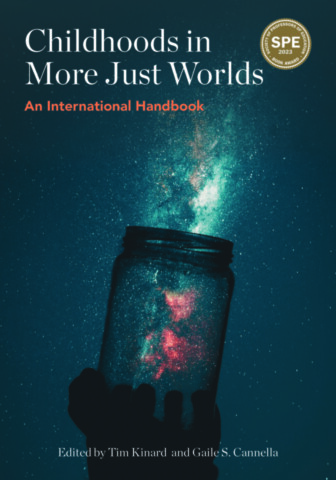
E-books are now distributed via VitalSource
VitalSource offer a more seamless way to access the ebook, and add some great new features including text-to-voice. You own your ebook for life, it is simply hosted on the vendor website, working much like Kindle and Nook. Click here to see more detailed information on this process.
Library E-Books
We are signed up with aggregators who resell networkable e-book editions of our titles to academic libraries. These editions, priced at par with simultaneous hardcover editions of our titles, are not available direct from Stylus.
These aggregators offer a variety of plans to libraries, such as simultaneous access by multiple library patrons, and access to portions of titles at a fraction of list price under what is commonly referred to as a "patron-driven demand" model.
Those who are younger continue to be objects of injustice and inequity; those who are younger, people of color, females, and human beings living in poverty have never been included in equitable performances of justice, care, respect, and fairness.The authors in this international volume use existing social values and institutions--and the strengths of these varied perspectives--to address justice in ways that have not previously been considered. The aim is to create more just worlds for those who are young--as well as for the rest of us.The first set of chapters, Bodies, Beings, and Relations in More Just Worlds, place at the forefront the lives of those who are younger who are commonly situated in positions of invisibility, disqualification, and even erasure. In the second section, Performances of Care and Education for More Just Worlds, the authors acknowledge that needed (re)conceptualizations of those who are younger, along with appreciation for human diversity and entanglements between the so-called human and nonhuman worlds, are the foundations for more just care and education environments. From the critique of neoliberal reform discourses to reconceptualizing human relations with nonhuman animal and material worlds, care and learning environments are rethought. The set of chapters in the final section, Stir of Echoes: 20th Century Childhoods in the 21st, take-up the 20th century critical concerns with constructions of “child” that have dominated and continue to govern perspectives imposed on those who are younger. Suggestions for becoming-with those who are younger through resources like reconceptualist scholarship, Black and Indigenous Studies, and various posthuman perspectives are provided throughout.Whatever the emphasis or focus of a section or chapter, throughout the volume is the recognition that dominant discourses (e.g. neoliberal capitalism, conservativism, progressivism, human exceptionalism) and the policies they create (and that facilitate them), influence possibilities for, and limitations to, more just childhood worlds. Therefore, each section includes chapters that address these complex discourses and policy issues. The reader is invited to engage with these complexities, to become-with the various texts, and to generate unthought possibilities for childhoods in more just worlds.Perfect for courses such as: Curriculum Theory │ Multicultural Education │ Cultural Knowledge of Teachers and Teaching │ Sociocultural Foundations │ Anthropology of Education │ Identity, Agency, and Education │ Race and Ethnic Relations in Schools │ Philosophical Foundations of Education │ Educational Epistemologies │ Theorizing and Researching Teaching and Learning │ Qualitative Research in Education: Paradigms, Theories, and Exemplars │ Epistemologies and Theories in Multicultural and Equity Studies │ Curricular Approaches to Multicultural and Equity Studies in Education │ Culturally Relevant Pedagogy (3) │ Multicultural and Global Perspectives in Teaching and Learning │ Teaching for Social Justice │ Diversity and Equity in Education │ 21st Century Childhood Curriculum │ Childhood and Globalization
More
E-books are now distributed via VitalSource
VitalSource offer a more seamless way to access the ebook, and add some great new features including text-to-voice. You own your ebook for life, it is simply hosted on the vendor website, working much like Kindle and Nook. Click here to see more detailed information on this process.
Library E-Books
We are signed up with aggregators who resell networkable e-book editions of our titles to academic libraries. These editions, priced at par with simultaneous hardcover editions of our titles, are not available direct from Stylus.
These aggregators offer a variety of plans to libraries, such as simultaneous access by multiple library patrons, and access to portions of titles at a fraction of list price under what is commonly referred to as a "patron-driven demand" model.
Studies of teacher leadership have proliferated over the past fifty years. Earlier work tended to focus exclusively on the link between teacher leadership and school improvement. Now, however, cross-cultural research on the relationship between teacher leadership and power, agency and school culture has the potential to contribute to a deeper understanding of the teaching profession in diverse geographical and social contexts. A Cross-Cultural Consideration of Teacher Leaders’ Narratives of Power, Agency and School Culture presents groundbreaking work that expands discussions of teachers’ work to highlight the struggles of a profession in three different countries: England, Jamaica and the United States. This research provides examples of teacher leaders’ narratives about power, agency and school culture, presenting the voices of teacher leaders across diverse contexts. It identifies the “lessons” that transcend culture and speaks to the importance of understanding how teachers’ work (and teacher leadership) functions within complex school cultures. This work has profound implications for teaching, learning and leading in a 21st century global economy.Perfect for courses such as:Teacher Leadership | Educational Leadership and Management | Teaching and Teaching Methods | Action Research/Applied Research
More